
A golden dropper bottle. An ancient Egyptian story. And a promise that your mind will soon feel aligned, clear and focused. Sound familiar? Then you have probably met the Pharaoh’s Nectar ads — and you are right to slow down before believing them.
This Pharaoh’s Nectar review does the slower thing. We checked the official page and the ClickBank order pages line by line: what is in the bottle, what it costs, and what is simply not stated. Some of what we found is reassuring. One gap is hard to miss.
Pharaoh’s Nectar Review: The Quick Answer
Quick answer: Pharaoh’s Nectar is a real liquid supplement sold through ClickBank, with all five ingredients named and an unusually long 365-day money-back guarantee. That is the good part. The weak part: the official page never prints a dose or serving size, there is no independent clinical testing of the product, and the pineal-gland and manifestation claims around it are marketing, not evidence. If you try it at all, treat it as a careful experiment — and keep your order number.
Affiliate disclosure: This Pharaoh’s Nectar review contains affiliate links. If you buy through one, we may earn a commission at no extra cost to you. This is an independent review — this is not the official website.
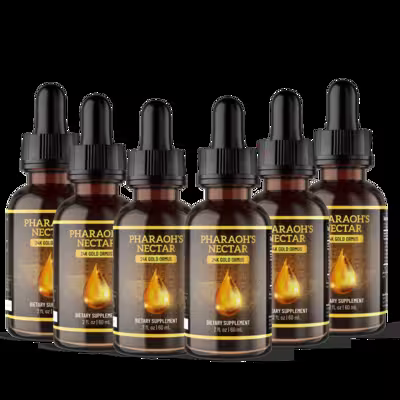
The official Pharaoh’s Nectar bottles — a liquid dietary supplement in an amber dropper bottle.
Pharaoh’s Nectar Review at a Glance
Pharaoh’s Nectar review basics, in one place:
| Product | Pharaoh’s Nectar — liquid dietary supplement drops in an amber dropper bottle |
| Supply | 1 bottle = 1 month; 3 bottles = 3 months; 6 bottles = 6 months | Ingredients | 5 named plants — Egyptian Blue Vervain, Eleuthero Root, Lady’s Mantle Herb, Sacred Licorice Root, Pure Peppermint Oil |
| Dose | Not printed on the official page — no serving size is stated anywhere we could find |
| Price | $69 (1 bottle), $177 (3 bottles), $294 (6 bottles); free shipping on the 6-bottle order only |
| Guarantee | 365-day money-back guarantee through ClickBank, “no questions asked” per the official FAQ |
| Bonuses | None listed with the current official offer |
| Support | support@pharaohsnectar.com |
What Is Pharaoh’s Nectar?
Pharaoh’s Nectar is a liquid dietary supplement that comes in an amber dropper bottle. There are no capsules to swallow and no powder to mix — it is a bottled drop formula built from five plant ingredients.
Pharaoh’s Nectar is positioned around the pineal gland. The vendor says its ingredients support a higher state of “alignment, clarity and focus,” and the sales story leans on ancient Egyptian imagery. Read that the way we do: it is the manufacturer’s framing, offered as a claim — not a measured result.
One thing you should know before anything else. Nowhere on the official page could we find a printed dose or serving size — not how many drops, not how often. For a product you are meant to take daily, that is an unusual thing to leave out, and it colors the rest of this review.
Does Pharaoh’s Nectar Work? How the Drops Are Supposed to Help
Pharaoh’s Nectar is supposed to work through its five botanicals. The idea, as the vendor tells it, is that the drops “bio-accumulate” in your system, so the effect builds the longer you take them. The official FAQ says most people start to notice something within a few days to a week.
Does Pharaoh’s Nectar work, though? Honestly, there is no way to confirm that from evidence. No clinical trial of the finished product has been published, and none of the five ingredients has been tested for “alignment” or pineal support in people. What exists is traditional herbal use and the seller’s own description.
So the fair way to hold it is this. The ingredients are real plants with real histories in herbal practice. The outcome promised for the blend — a clearer, more aligned mind — has not been measured in any study we could find. Anything you feel on it is your own experience, not a proven effect.
Pharaoh’s Nectar Ingredients: The Five Plants in the Bottle
Pharaoh’s Nectar names all five of its ingredients on the official page, and that deserves credit — many drops hide behind a “proprietary blend.” But the page shows no amount for any of them, so you can see what is in the bottle, just not how much of each plant you are getting.
| Ingredient | What it is | What the evidence actually says |
|---|---|---|
| Egyptian Blue Vervain | A traditional calming herb used in North American and European herbal practice | Human clinical evidence is very limited. No trials test it for focus, clarity or pineal support. |
| Eleuthero Root | An adaptogen, often called Siberian ginseng, used for stamina and stress | Studies on fatigue and endurance are small and mixed. It is the most “practical” ingredient here, but it is no proof the blend works. |
| Lady’s Mantle Herb | A traditional European herb, historically used as an astringent and in women’s herbal remedies | Essentially no modern clinical trials. Its role in this formula rests on tradition, not testing. |
| Sacred Licorice Root | A long-used root with a naturally sweet compound, glycyrrhizin | Well documented — including a caution: regular or heavy licorice intake can raise blood pressure and lower potassium. Relevant if you take drops daily (see Side Effects). |
| Pure Peppermint Oil | A familiar aromatic oil, best known for digestive comfort and flavor | Reasonable evidence for digestive uses; none for focus or clarity. It can trigger heartburn in some people. |
The pattern is easy to see once the label is on the table. A calming herb, an adaptogen, two traditional plants with thin records, a blood-pressure-relevant root, and a pleasant oil — pointed at the mind. Nothing here is exotic or alarming. Nothing here is proven for the promise on the bottle, either.
Pharaoh’s Nectar Possible Benefits: Claims vs. Evidence
Pharaoh’s Nectar is sold on three words: alignment, clarity and focus. The vendor also describes the formula as natural, plant-based and non-GMO, with no stimulants and nothing habit-forming — a calmer alternative to caffeine-style focus products, in their telling.
Here is how we would sort those claims. “No stimulants” and “plant-based” are label-level statements you can check against the five named ingredients, and they look consistent. The mental benefits — sharper focus, a clearer head, a sense of alignment — are the manufacturer’s claims. They may match some buyers’ experience, but no study of this product stands behind them.
The one benefit you do not have to take on faith is the safety net, and it comes later in this review: a full 365 days to change your mind. For an unproven product, that refund window is the most concrete advantage in the whole offer.
Pharaoh’s Nectar Side Effects?
Pharaoh’s Nectar has no published safety testing that we could find, and we found no verified reports of serious harm tied to it. But “no reports found” is not the same as “proven safe” — especially for a formula whose official dose is not even printed.
The ingredient-level cautions are the sensible ones. Licorice root is the main one: taken regularly, it can raise blood pressure and lower potassium, so if you manage blood pressure or take heart or blood-pressure medication, talk to your clinician first. Peppermint oil can cause heartburn in some people, and eleuthero can interact with certain medicines.
To its credit, the official page gives the same advice we would: if you have a medical condition, consult your doctor before using it. Pregnant, nursing, or under 18? The standard supplement caution applies — skip it unless your clinician says otherwise.
Pharaoh’s Nectar Pros and Cons
Pharaoh’s Nectar earns real credit for disclosure in some places, and loses it in one big one. The balance sheet of this Pharaoh’s Nectar review:
| What counts in its favor | The honest drawbacks |
|---|---|
| All five ingredients are named — no hidden proprietary blend | The dose is never printed. No serving size, no drop count, no routine to follow |
| A full 365-day money-back guarantee — the longest window we usually see | Pineal and manifestation claims are marketing, not evidence |
| Refunds run through ClickBank, a real retailer, not the seller’s goodwill | No independent clinical testing of the finished product could be found |
| Simple pricing: $69 / $177 / $294, with free shipping on 6 bottles | Per-bottle price is premium for an unproven blend |
| Support email is published: support@pharaohsnectar.com | No empty-bottle policy is stated, and who pays return shipping is not stated |
| One-time payment — no subscription or auto-ship in the offer we checked | Independent buyer reviews are scarce; most online coverage is affiliate marketing |
Pharaoh’s Nectar Reviews and Complaints: What Buyers Actually Say
Pharaoh’s Nectar reviews online are plentiful — and that is exactly the problem. Nearly every page we found is affiliate content written to sell the drops, including first-person “30-day trial” stories and star ratings with no testing behind them. Treat any of those the way you would treat an ad.
On the official page itself, the praise is the vendor’s own marketing. We could not find independent, verifiable buyer feedback — a consumer-lab write-up or confirmed review-platform coverage — that would let us summarize real complaints or real satisfaction honestly. So we will not invent either.
What we can say is structural. The complaints risk with this kind of offer is rarely the bottle; it is expectations. If you buy hoping for a proven focus effect, the evidence is not there. If you buy knowing it is an unproven herbal blend with a year-long refund behind it, the risk is at least priced in.
Is Pharaoh’s Nectar Legit or a Scam?
Pharaoh’s Nectar is sold through ClickBank, the retailer of record, which means a real checkout, a real order confirmation, and a refund route that does not depend on the seller answering your email. The ingredients are named, the prices are printed, and a support address — support@pharaohsnectar.com — is published. By the checks that matter, this is a legitimate offer, not a scam.
Legitimate is not the same as proven, though. The marketing reaches well past the evidence: pineal “activation,” manifestation, a formula that supposedly builds in your system. None of that has been tested, and the missing dose is the kind of basic omission a confident seller should not make.
Our working rule for offers like this: judge the paperwork, not the poetry. The paperwork here — named ingredients, stated prices, a 365-day ClickBank guarantee — is better than most. The poetry is free to ignore.
What We Could Not Verify in This Pharaoh’s Nectar Review
Pharaoh’s Nectar leaves a few basic questions unanswered, and a fair Pharaoh’s Nectar review should list them plainly rather than fill them in:
- The dose. No serving size, drop count or daily routine is printed anywhere on the official page. One bottle is sold as a one-month supply, but the routine itself is not stated.
- Per-ingredient amounts. All five ingredients are named; no amount is shown for any of them.
- Return shipping. The guarantee promises a refund, but the page does not state who pays to send bottles back — and no empty-bottle policy is stated either.
- Independent testing. We found no clinical trial or third-party lab test of the finished product.
- Independent buyer feedback. We could not find verifiable, non-affiliate customer reviews to summarize.
If the seller publishes a dose and return terms later, this section can shrink. Until then, these gaps are part of what you are buying.
Pharaoh’s Nectar Price, Packages and the 365-Day Guarantee
Pharaoh’s Nectar is sold in three packages on the official order page, priced in US dollars. Confirm the final total at checkout before you pay.
| Package | Total | Per bottle | Notes |
|---|---|---|---|
| 1 bottle (1-month supply) | $69 | $69 | Starter size; shipping extra |
| 3 bottles (3-month supply) | $177 | $59 | Shipping extra |
| 6 bottles (6-month supply) | $294 | $49 | Free shipping on this package |
Two honest notes on the numbers. First, the “savings” framing on the sales page is measured against a higher list price the vendor sets itself — the real math is simply that the per-bottle price falls as the pack grows. Second, if you order from outside the US, international shipping fees apply.
No bonus listed with the current official offer — the 365-day guarantee is the main buyer protection. At checkout you may see two optional paid extras — The Golden Vitality Code ($19) and shipping protection ($3.95). They are add-ons you pay for, not bonuses, and you can leave both unticked.
The guarantee itself is the strongest part of the offer: 365 days from purchase, “no questions asked” per the official FAQ, with refunds handled through ClickBank. The vendor asks only that you give the drops a fair chance first. If you claim, start from your ClickBank order confirmation email and keep that order number — it is your fastest route to a refund.
Who Might Consider Pharaoh’s Nectar — and Who Should Skip It
Pharaoh’s Nectar might suit you if you enjoy herbal, stimulant-free formulas, you are curious about the pineal-focused approach, and you are comfortable treating the purchase as an experiment protected by a long refund window. Start with one bottle, note how you feel in a simple diary, and decide well inside the year.
Skip it if any of these sound like you:
- You want a proven focus or clarity effect. No product-level evidence exists; a supplement cannot promise you that outcome.
- You manage blood pressure, or take heart, blood-pressure or other regular medication, without clearing a daily licorice-containing formula with your clinician first.
- You need clear instructions. The official dose is not printed — if an undefined routine bothers you, it should, and this is not your product.
- You are pregnant, nursing, or under 18 — the standard supplement caution.
- Mental fog is new, severe or worsening. That deserves a clinician and a proper workup, not a dropper bottle.
Pharaoh’s Nectar Review: Our Final Verdict
This Pharaoh’s Nectar review lands in a careful place. Pharaoh’s Nectar is a legitimate, deliverable product: five named plant ingredients, honest package pricing, a published support email, and a 365-day guarantee through ClickBank that genuinely lowers your risk. It is not a scam.
But the promise outruns the proof. The pineal and manifestation story is marketing, no clinical testing of the product exists, and a seller who will not print a dose is asking for more trust than the label earns. Buy it, if you buy it, for the experiment and the guarantee — never for a guaranteed result.
If you do try it, do it the sane way: one bottle first, a short daily note of how you feel, and a decision date set well inside the 365 days. And if your focus or energy problems are new or getting worse, close this page and talk to your doctor first — that conversation is worth more than any bottle.
Pharaoh’s Nectar FAQ
Pharaoh’s Nectar questions come up again and again, so here are straight answers to the ones that matter most:
Does Pharaoh’s Nectar really work?
There is no proof that it does. No clinical trial of Pharaoh’s Nectar has been published, and its five ingredients have not been tested in people for focus, clarity or pineal support. The “alignment, clarity and focus” language is the manufacturer’s claim — you may or may not notice anything, and the 365-day guarantee exists for exactly that uncertainty.
How do you take Pharaoh’s Nectar?
Honestly, the official page does not say. No serving size, drop count or daily routine is printed anywhere we could find — one bottle is simply sold as a one-month supply. If you order, follow the directions on the bottle you receive, and if the label is unclear, ask support@pharaohsnectar.com before you start.
What are the ingredients in Pharaoh’s Nectar?
Five named plants: Egyptian Blue Vervain, Eleuthero Root, Lady’s Mantle Herb, Sacred Licorice Root and Pure Peppermint Oil. All five are named on the official page, which is better disclosure than most drop formulas offer. The page does not show an amount for any of them.
Does Pharaoh’s Nectar have side effects?
No verified reports of serious harm surfaced in our research, but the product has no published safety testing, so “proven safe” would be too strong a claim. The practical cautions are ingredient-level: licorice root can raise blood pressure with regular use, peppermint oil can cause heartburn, and eleuthero can interact with some medicines. On medication, or managing a condition? Check with your clinician first.
How much does Pharaoh’s Nectar cost?
Three packages: 1 bottle for $69, 3 bottles for $177 ($59 each), and 6 bottles for $294 ($49 each). Shipping is free on the 6-bottle order only, and international orders carry shipping fees. There are no bonuses in the current offer; the two extras shown at checkout are optional paid add-ons.
What is the Pharaoh’s Nectar refund policy?
A 365-day money-back guarantee, “no questions asked” per the official FAQ, handled through ClickBank — returns run 365 days from purchase. The vendor asks that you give the drops a fair chance first. One gap: the page does not state who pays return shipping, and no empty-bottle policy is stated, so keep your order confirmation email in case you claim.
Is Pharaoh’s Nectar legit or a scam?
Legit, on the checks that matter — and unproven on the claims that sell it. It is a real product sold through ClickBank with named ingredients, printed prices, a published support email and a year-long refund route. What is not established is the benefit story: the pineal and manifestation claims are marketing, and no independent testing backs them.
Based on the official Pharaoh’s Nectar sales page and ClickBank order pages, checked on November 6, 2026. Pharaoh’s Nectar is a dietary supplement; this page is not medical advice, a diagnosis, or a treatment. Produced from desk research — we did not purchase or test the product.