
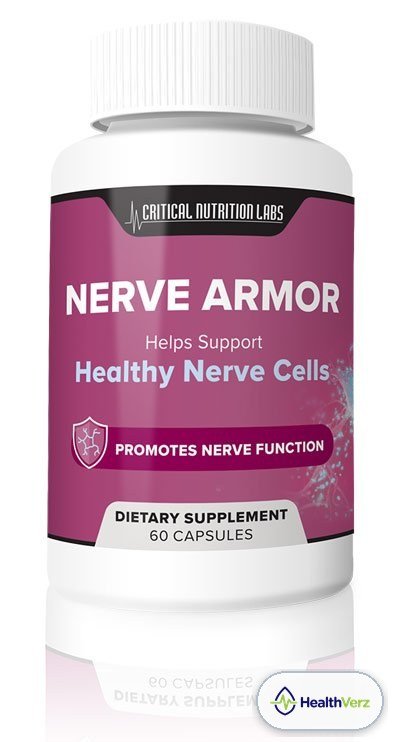
Nerve Armor is a nerve-support supplement aimed at burning, tingling, and discomfort, sold in 1, 3, and 6-bottle bundles from $39 to $59 per bottle. This review leads with our direct verdict, then breaks the formula down ingredient by ingredient, checks the marketing against neuropathy research, and covers when your symptoms need a neurologist instead.
A First Look at Nerve Armor
For Nerve Armor, let’s start with the obvious: nerve pain is miserable. Burning feet. Tingling hands. Sleep wrecked. So honestly, I get why people reach for something like this.
First impression of the formula: better than most. PEA and alpha-lipoic acid have real research threads behind them, which is rare in this category. But “better ingredients” and “proven to work” are two different things. Let’s dig in.
Nerve Armor Review: Our Direct Verdict
OUR DIRECT VERDICT
With Nerve Armor, what you’re getting is a clearly-priced nerve supplement with a better-than-average ingredient list. PEA and alpha-lipoic acid come with genuine research behind them. But nerve symptoms need a diagnosis first, and the marketing stories run ahead of the evidence. Only reasonable as a doctor-discussed add-on. And watch the subscription checkbox at checkout.
Desk research only. No hands-on or clinical testing.
Nerve Armor Facts at a Glance
| Product type | Nerve-support capsule supplement |
|---|---|
| Format | Daily capsules; 1, 3, and 6-bottle bundles |
| Key ingredients | PEA, alpha-lipoic acid, benfotiamine, corydalis, gotu kola |
| Strongest evidence | PEA and alpha-lipoic acid (modest nerve-pain trial data) |
| Price observed | $39–$59 per bottle; subscribe & save available |
| Guarantee | 60-day money-back, stated by seller |
| Where to buy | Official website only (nervearmor.org) |
| Our testing | Desk research only — no hands-on or lab testing |
What Nerve Armor Is (and Isn’t)
Nerve Armor comes as daily capsules aimed at nerve discomfort. Think burning, tingling, and numbness, the classic neuropathy complaints (you know the ones).
But a capsule isn’t a diagnosis, and it isn’t a treatment for diabetic neuropathy, sciatica, or any specific nerve condition either. Nerve discomfort has a long list of causes: diabetes, vitamin deficiencies, medications, injuries. A supplement can’t tell you which one is yours.
Nerve Armor Ingredients: What’s Inside
Nerve Armor lists five headline ingredients, all of them public. Below is each one, with the evidence level we’d honestly assign it.
| Ingredient | What the evidence shows | Practical meaning |
|---|---|---|
| PEA (palmitoylethanolamide) | A naturally occurring fatty acid studied for nerve pain and inflammation; human trials exist and show promise, though modest in size. Trials have tested it as a standalone ingredient at measured daily doses — compare against this label’s amounts | The most interesting ingredient here — real trial data, not just tradition, but dose matters |
| Alpha-lipoic acid | Antioxidant with some of the better-studied nerve research, including diabetic neuropathy trials; results modest on average. Some research suggests it may influence blood sugar — relevant if you take diabetes medication | Genuine research — but “modest average effects,” not cures; diabetics should loop in their doctor |
| Benfotiamine | Fat-soluble B1 studied for nerve cell metabolism, mainly in diabetic neuropathy; small trials, mixed-to-modest results | Plausible supporting player |
| Corydalis | Traditional herb used for pain relief; limited modern clinical research for nerve symptoms | Long traditional use, thin clinical proof |
| Gotu kola | Traditional herb associated with circulation and nerve support; clinical evidence for neuropathy is thin | Interesting pedigree, weak data |
EVIDENCE NOTE
Nobody has run a published clinical trial on this finished blend. The research cited covers individual ingredients, and neuropathy trials are notorious for all-over-the-place individual results (seriously, the variance is wild).
A word on doses: check the label for per-serving amounts before you order. Whether researched ingredients can do anything at all comes down to amounts. Don’t skip this step.
Does Nerve Armor Really Work?
So does Nerve Armor work for neuropathy? Nobody’s proven it. No trial has tested this specific blend.
Here’s what we can say with a straight face: two of its ingredients, PEA and alpha-lipoic acid, have been studied for neuropathic symptoms, with modest and mixed results. Some trial participants saw real benefit. Others saw almost nothing. That’s the honest picture, and it carries over here.
Here’s the thing the marketing skips: the cause matters enormously. Diabetic neuropathy, B12 deficiency, medication side effects, pinched nerves, autoimmune conditions. All of them produce “burning and tingling,” yet each responds to completely different things. A nutrient blend might plausibly help one cause and do zero for another. So the diagnosis-first advice isn’t boilerplate. It decides whether this kind of product even belongs in your plan.
There’s also a measurement problem. Nerve trials lean heavily on patient-reported pain scores, which are real but subjective. Pain perception moves with sleep, stress, mood, and expectation. So when someone feels better after two months on a supplement, that experience is genuine, but it doesn’t prove the capsules caused it. Honest reviewers have to hold both truths at the same time.
WHAT THIS MEANS
As nerve formulas go, this one sits on firmer research ground than most. But “better ingredients” still isn’t “proven to work.” Keep expectations modest. And slow.
Nerve Armor Claim Verification: What the Marketing Really Means
Take the Nerve Armor testimonial where burning and tingling are “gone.” That’s a sales-page story, unverified. Trials of individual nutrients for neuropathy show modest average effects at best. Not cures.
Yeah, about that “works for nerve pain generally” pitch. Nerve discomfort has too many distinct causes for that. No single blend handles diabetic neuropathy, medication-induced nerve damage, and sciatica equally well.
Subscribe and save sounds convenient. And it can be, if you choose it on purpose. But check whether the subscription comes pre-selected at checkout, and know exactly how to cancel (it’s often pre-selected, so look closely).
CLAIM BOUNDARY
Testimonials show the best outcomes, never the typical ones. In neuropathy trials, the average effect of these nutrients lands at modest. That average is the number that matters. Ignore it and you’re shopping blind.
Nerve Armor Pros and Limitations
Where Nerve Armor scores: clear tiered pricing with real bulk discounts. An ingredient list with more research behind it than most competitors (PEA, ALA). A stated 60-day guarantee. And a one-time purchase option.
Where it falls short: your nerve symptoms need a diagnosis before any supplement. No clinical trials on the product itself. The subscribe option needs a careful eye at checkout. And results in this category run slow and highly personal (don’t expect overnight anything).
Nerve Armor Side Effects & Safety
On safety, Nerve Armor’s ingredients are generally well tolerated. Most users report no issues, though sensitive stomachs can see mild digestive upset.
Pregnant or breastfeeding women should skip it, as should anyone under 18. If you take blood thinners or diabetes medication, loop your doctor in first. And flag any nerve supplement with your doctor regardless. Nerve symptoms deserve a doctor’s attention, not just capsules.
Diabetes medication gets its own callout. Alpha-lipoic acid has been studied in diabetic neuropathy, and some research suggests it can move blood sugar levels. If you’re on glucose-lowering medication, your doctor may want to watch your numbers when you start anything new. Not because disaster is likely. Because overlapping effects deserve monitoring.
Seniors, one extra caution: new numbness or weakness can signal B12 deficiency. It’s common in older adults and easily treatable, but only once it’s diagnosed. A B12 blood test is cheap and rules out one of the most fixable causes of nerve symptoms. Book the test before buying the supplement.
SAFETY GUIDE
New numbness, weakness, or spreading symptoms? See a doctor first. Those symptoms can signal diabetes, B12 deficiency, or other treatable conditions. Diagnosis before supplement, always.
Nerve Armor Reviews & Complaints
Online reviews for Nerve Armor lean positive: less tingling, better sleep, better mobility. All of it unverified, and mostly sitting on seller-linked pages (grain of salt, people).
The complaints mostly say the same thing: slow or minimal results. Which honestly fits the science. Nerve nutrition works gradually, and effects swing widely by cause. We couldn’t find any independent verified testing. Read every review as an anecdote, not data.
Here’s how to read this category’s reviews usefully: ignore the star rating and look for specifics. Reviews that name which symptom changed, after how long, and what else the person was doing (new medication? better glucose control? physical therapy?) beat “it worked great!” with zero detail. Most glowing reviews can’t separate the supplement from everything else going on in the reviewer’s life, and the honest ones will say so.
Then there’s the timeline trap. One-week reviews are meaningless for nerve nutrition. Six-month reviews are rare, because most people either quit or stop posting. The most trustworthy pattern is boring: modest improvement, gradual onset, continued use.
Nerve Armor Price, Packages & Refund Terms
Here’s the Nerve Armor pricing we observed: one bottle at $59 (plus shipping), three bottles at $49 each, six bottles at $39 each. There’s also a subscribe-and-save option with a discount on monthly delivery.
Double-check the live total at checkout, and look hard at whether the subscription box comes pre-selected. The seller states a 60-day money-back guarantee. Confirm the exact terms on the official page before paying.
Where to Buy Nerve Armor
For Nerve Armor, the official website (nervearmor.org) is the only legit channel. You won’t find it legitimately on Amazon, eBay, or Walmart.
Anywhere else, you’re risking counterfeit or expired product. And only the official channel honors the money-back guarantee. Buy direct.
Is Nerve Armor Legit or a Scam?
Is Nerve Armor a scam? No. It’s a legitimate product. Ingredients clearly identified, amounts published, guarantee stated, real company behind it.
But “legitimate supplement” and “proven treatment” are different things. No trial of the blend exists, and nerve research shows modest, variable results. Our read: legit product, overhyped marketing stories. That’s the long and short of it.
How to Use Nerve Armor
Take Nerve Armor per the serving directions on the label. Third-party reviewers mention two capsules daily with water. Confirm against your bottle’s current label.
Take it with a meal. That helps absorption and keeps stomach issues away. And give it time. Nerve support runs on a weeks-and-months clock, not days. Patience isn’t optional here.
Here’s a practical tip: keep a simple symptom log. Once a week, score your burning, tingling, and sleep disruption from 1 to 10, and note anything else that shifted (new meds, illness, activity level). After two months you’ll hold actual data instead of vibes, which your doctor will appreciate too. Memory is a lousy measuring tool for slow change.
Hold off judging until the six-to-eight-week mark. Nerve nutrition simply needs that long to show anything. But circle day 50 on your calendar as the decision point, safely inside the 60-day guarantee window. If your log shows no real trend by then, there’s your answer. Use the guarantee instead of funding a third month of hope. Working supplements show a trend. The ones that don’t, don’t.
Nerve Armor Alternatives: When Something Else Makes More Sense
If you have nerve symptoms, the first alternative to Nerve Armor isn’t another product. It’s a diagnosis. Diabetes screening and B12 testing catch the most common treatable culprits.
For the nutrients alone, standalone alpha-lipoic acid or a B-complex with published dosages cost less and are easier to evaluate. And for pain management, ask your doctor about proven options instead of guessing with blends. Cheaper and smarter, honestly.
Don’t skip the unglamorous options either. For diabetic neuropathy, tighter glucose control carries more evidence than any supplement. With B12 deficiency, a supplement or injection fixes the actual cause. And physical therapy plus regular movement outperform capsules for plenty of people. A blend like this is an educated guess. These options target causes.
How We Researched This Nerve Armor Review
This Nerve Armor review is desk research only. We went through the official sales page, third-party reviews, and published nerve-nutrition research via PubMed plus government health sources (NINDS, NIH Office of Dietary Supplements).
No hands-on testing. No lab analysis. No clinical trial. Affiliate links don’t influence the verdict.
Nerve Armor Sources & References
- National Institute of Neurological Disorders and Stroke — Peripheral neuropathy: causes and treatment
- National Institutes of Health, Office of Dietary Supplements — Vitamin B12 fact sheet for consumers
- PubMed — Clinical research on alpha-lipoic acid and neuropathy
- Mayo Clinic — Peripheral neuropathy: symptoms and causes
Our Nerve Armor Verdict
OUR VERDICT
Our final read on Nerve Armor: a clearly-priced nerve supplement with a better-than-average ingredient list. PEA and alpha-lipoic acid bring genuine research threads. But nerve symptoms need a diagnosis first, while the marketing stories run ahead of the evidence. Sensible only as a doctor-discussed add-on. And watch that subscription checkbox at checkout. Seriously.
Testing statement: Desk research · No hands-on or clinical testing.
Nerve Armor Frequently Asked Questions
How much does Nerve Armor cost?
$39–$59 per bottle. We observed 1 bottle at $59 (plus shipping), 3 bottles at $49 each, and 6 bottles at $39 each — the 6-bottle tier being the best per-bottle value. A subscribe-and-save option offers a further discount with monthly delivery. Verify the live total at checkout, and check the subscription isn’t pre-selected.
Is Nerve Armor legit or a scam?
Legit product, unproven blend. It’s a real product with clearly identified ingredients, published ingredient amounts, and a stated 60-day guarantee — not a typical scam. But “legitimate supplement” is not the same as “proven treatment”: no clinical trial has tested this blend, and nerve research shows modest, variable results.
What are the main ingredients in Nerve Armor?
PEA, ALA, benfotiamine, corydalis, gotu kola. The formula centers on palmitoylethanolamide (PEA) and alpha-lipoic acid — both with real nerve-related trial data — plus benfotiamine (a B1 form), corydalis, and gotu kola. PEA and ALA have the strongest research; the herbs rely more on traditional use. Check the label for dosages.
Does Nerve Armor work for neuropathy?
Not proven. Some of its ingredients — PEA, alpha-lipoic acid, benfotiamine — have been studied for neuropathic symptoms with modest, mixed results. But no trial has tested this specific blend, and neuropathy has many different causes that no single supplement can address. Keep expectations modest.
Is Nerve Armor safe? Any side effects?
Mostly yes. The ingredients are generally well tolerated — most users report no issues, though mild digestive upset is possible in sensitive people. It should be avoided by pregnant or breastfeeding women and anyone under 18. Talk to your doctor first if you take blood thinners or diabetes medication, and flag any nerve supplement with your doctor.
How long does Nerve Armor take to work?
Unknown. No clinical data exists for this blend’s timeline. Third-party reviewers mention 1–2 months of consistent use before judging anything — that’s plausible for nerve nutrition, but it’s anecdote, not evidence. Nerve support is inherently slow; assess over months, not days.
Can I buy Nerve Armor on Amazon?
No. It sells exclusively through its official website (nervearmor.org) and is not legitimately available on Amazon, eBay, or Walmart. Listings elsewhere carry counterfeit or expired-product risk — and only the official channel honors the money-back guarantee.
Who should avoid Nerve Armor?
Several groups should skip it. Pregnant or breastfeeding women and anyone under 18 should avoid Nerve Armor. And anyone with new, undiagnosed nerve symptoms should get a medical evaluation first — numbness and tingling can signal diabetes, B12 deficiency, or other treatable conditions that a supplement can’t sort out.
Can I take Nerve Armor with diabetes medication?
Talk to your doctor first. Alpha-lipoic acid — one of Nerve Armor’s key ingredients — has been studied in diabetic neuropathy and some research suggests it can influence blood sugar. If you’re on glucose-lowering medication, your doctor may want to monitor your levels when you start. Don’t adjust your medication on your own.
What happens if I miss a dose of Nerve Armor?
Nothing serious. Nerve Armor is nutrition support, not medication — missing a day won’t set you back. Just resume your normal dose the next day and don’t double up. Nerve support is measured in weeks and months anyway, so one missed day is noise.
Considering Nerve Armor?
Get your nerve symptoms evaluated first, then decide.
Explore Nerve Armor
Check the official website for current pricing, product details and return terms.
Affiliate link — we may earn a commission at no extra cost to you.